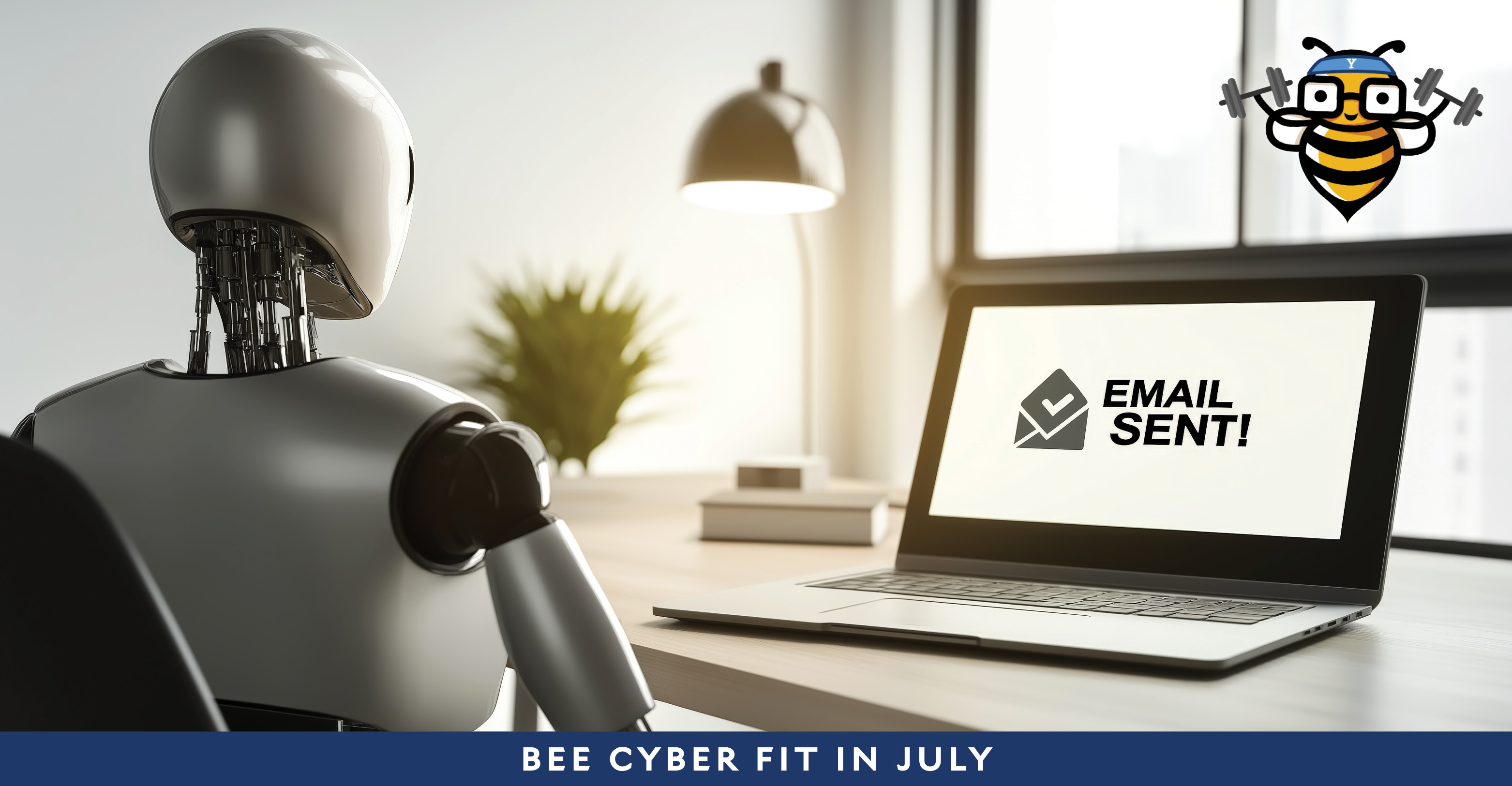
Artificial Intelligence (AI) can fake a lot — voices, writing styles, even whole conversations. But it can’t fake you.
Social engineering scams are getting a glow-up, thanks to AI.
That urgent-sounding email from your supervisor? That weird “just checking in” text? Cybercriminals are using AI to mimic real people and pressure you into reacting fast.
And these tricks don’t stop at work — they’re showing up in personal inboxes, family group chats, and texts to your phone, too.
But at Yale, we don’t panic. We Recognize, Relax, and Rethink.
Your 3Rs of Staying Cyber Fit:
RECOGNIZE
Cybercriminals are sliding into inboxes and texts — and they want you to act without thinking. Stay alert for red flags like:
- Texts that say you owe money to E-ZPass or other toll services
- DMV scams claiming unpaid tickets and threatening driver’s license suspension
- Unusual requests from known contacts (like your Dean asking you to send them Apple Pay or purchase gift cards)
Think outside your inbox. A “quick favor” might be a phishing trap in disguise.
RELAX
AI wants to trigger your email and text reflexes — not your reasoning. Take a breath before you act. Pause if:
- The message makes you anxious, flattered, or rushed
- It comes at an odd time (like a Saturday night “emergency”)
- It just feels off, even if it looks polished
Be mindful before responding. A moment of pause is your secret weapon. Our FUDGE model can help you identify red flags.
RETHINK
You don’t have to respond right away — or at all. Consider safer ways to check what’s real:
- Contact the person directly using info you already have
- Report the message
- Ask for help
Sometimes, the best reply is no reply at all.
You’ve got instincts. You’ve got smarts. And now you’ve got the 3Rs – Recognize, Relax, Rethink.
Use them — at Yale and at home — to bee cyber fit.
P.S. Curious about Artificial Intelligence (AI)? Want to use AI tools without oversharing your data — or getting stung by an AI-generated scam? You’re not alone! Join the Information Security Office for Bee Cyber Smart with AI: It’s as Easy as A–B–C, July 21-August 1, a campaign designed to help the Yale community use AI securely, thoughtfully, and confidently.
